Why are beat boards essential for writing and refining a screenplay?
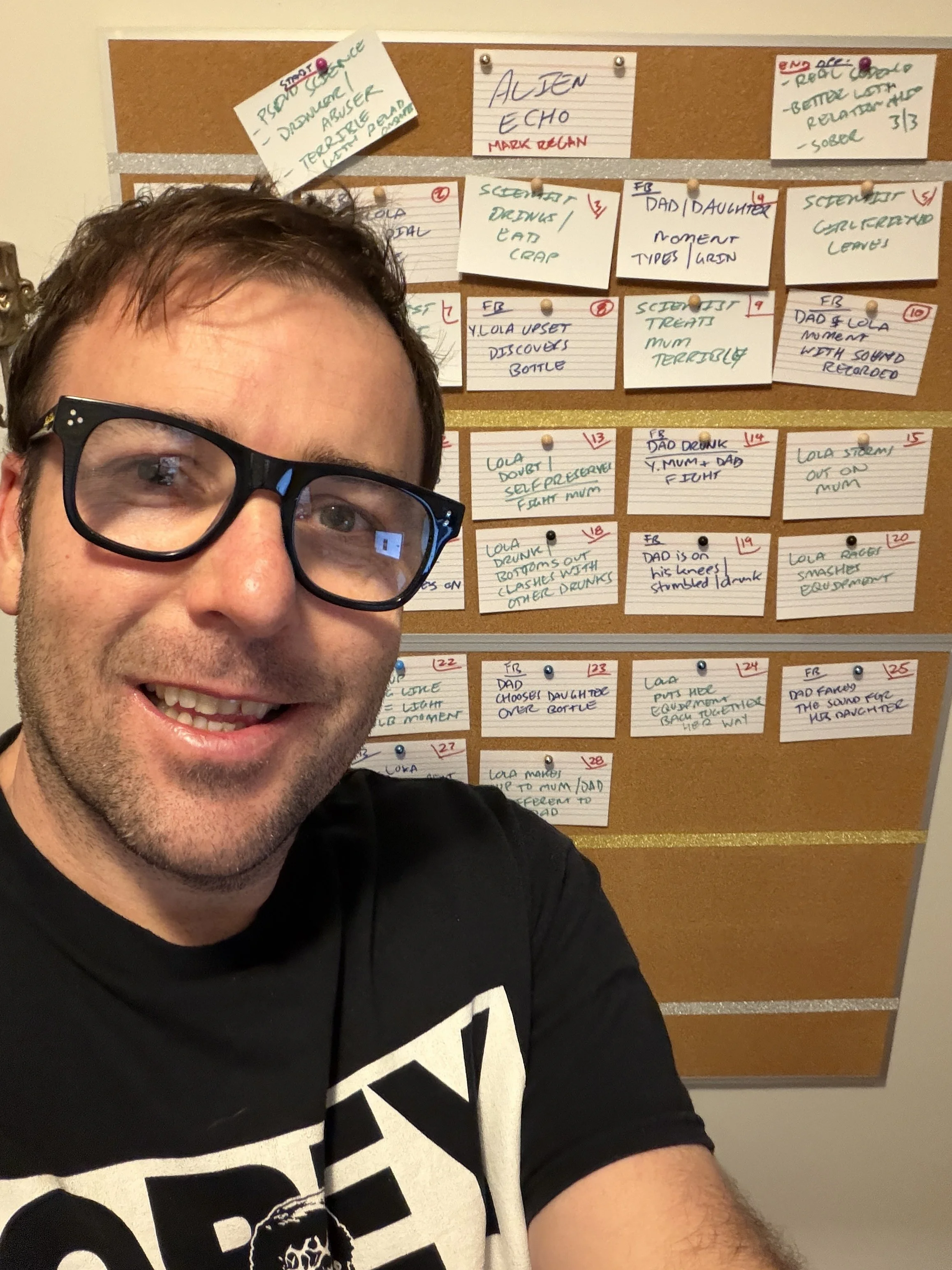
Being a scriptwriter means having one of these bad boys. A beat board.
It is not something you physically bash in, although at times it can feel like you are bashing your head against the story. But that is part of the process.
Beats equal scenes, and scenes become the key parts of a film.
Why Beat Boards Matter
A beat board is one of the most important tools when you are writing, drafting, and planning your script.
It works for everything. Film, theatre, novels, any kind of storytelling. It is something the experts always talk about, and for me, it is a way to clearly visualise the key moments in a story.
The beauty of it is flexibility. You can take a beat off, throw it away, replace it, or rearrange it completely. That freedom allows the story to evolve as you figure out what works and what does not.
From Writing to Editing
This beat board became symbolic for me today.
I am taking it down for Alien Echo because the film is now completely finished.
But interestingly, I brought it back during the editing process. I wanted to see those beats again and ask a simple question. Did we capture them on set and are they still working in the final film?
I am happy to say they are.
During editing, I did end up merging a few moments together to improve the flow, but the core beats are all still there. The structure held strong, and that is exactly what you want.
A Clean Slate for the Next Story
Taking the beat board down feels like closing a chapter.
It is a clean slate, ready for the next idea, the next story, and the next set of beats to map out.
That is the cycle of being a writer.
Build it, break it, reshape it, and then start again.
If you’d like to follow my filmmaker journey, from behind‑the‑scenes moments through to festival screenings, subscribe to my YouTube channel, where I’ll be sharing updates, insights, and the creative process as the documentary comes to life.