What Is Alien Echo really about? A film Director explains the story and themes
Alien Echo is a science fiction drama, but at its heart it is a story about family, addiction, and the struggle to break free from the emotional patterns that shape us.
The film follows Lola, a brilliant but troubled scientist who is searching for an alien signal while confronting the damage left behind by her father. Although the story unfolds through the lens of science fiction, it is really about something far more human. It asks how our childhood experiences echo throughout our lives, shaping our identity, our relationships, and our sense of self long after childhood has ended.

Lola is gifted, determined, and intelligent, but she is also a woman at war with herself.
Without fully recognising it, she has inherited many of the same destructive behaviours as her father. She isolates herself, struggles to build meaningful relationships, and slowly repeats the emotional patterns she witnessed growing up.
Her search for alien signals becomes a metaphor for something much deeper. Like many of us, she is searching for meaning, truth, and connection.

One of the ideas that interested me most as a filmmaker was portraying a father who could be both loving and deeply flawed.
Too often, stories reduce difficult parents to simple villains. Real life is rarely that straightforward.
Lola's father is charismatic, caring, unreliable, and self destructive all at once. Those contradictions are what make him human, and they are what leave such a lasting impact on Lola's life.
As the story unfolds, Lola begins to recognise that she has inherited far more than memories. She has inherited emotional habits that threaten to define her future unless she chooses another path.

Although Alien Echo explores alien communication, satellites, and scientific discovery, those ideas are never the destination.
The science fiction exists to support the emotional story.
Ultimately, the film asks whether we can recognise the patterns handed down through our families and whether we have the courage to break them.
Can we choose a different future?
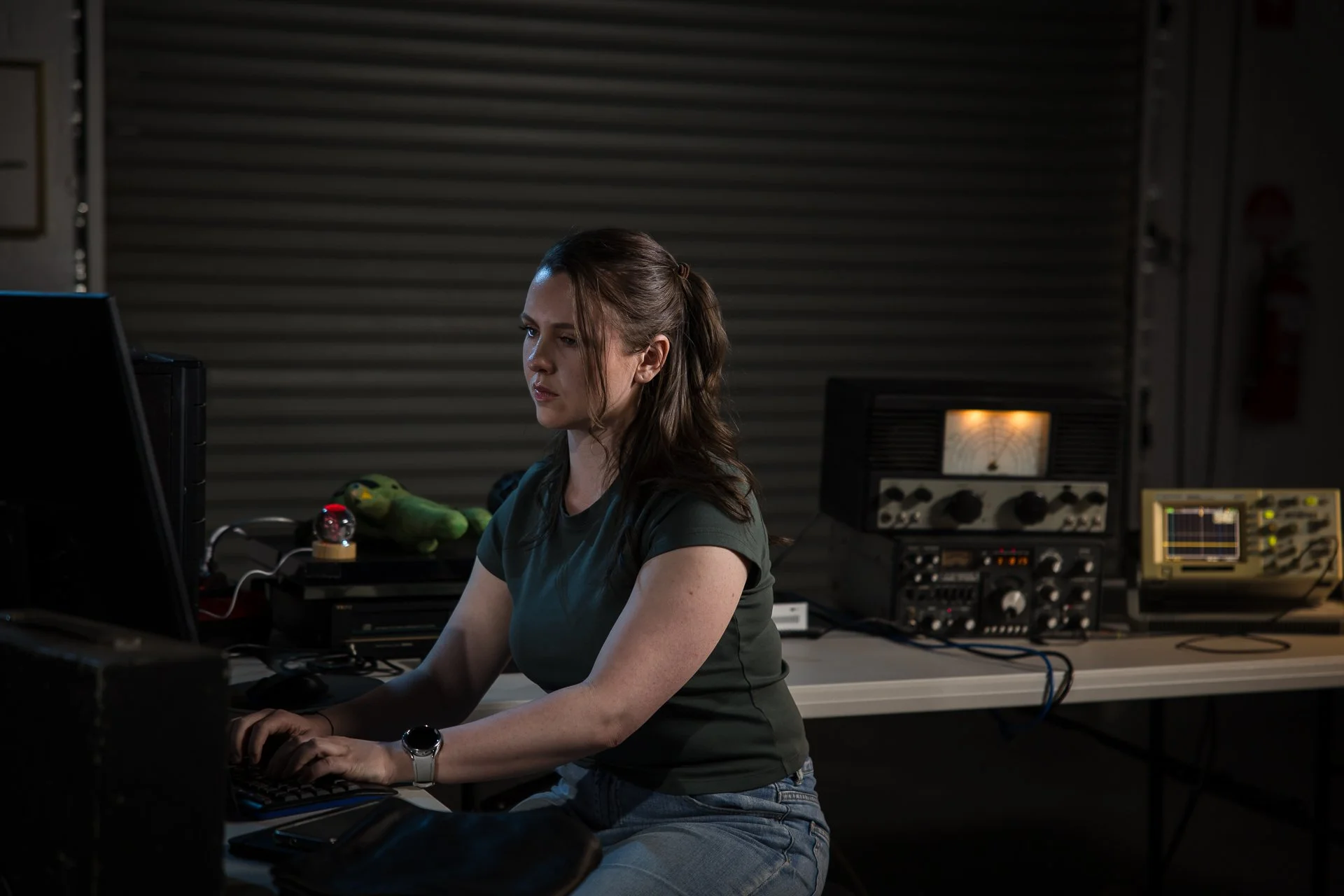
From the beginning, I wanted the film to feel emotionally intimate while remaining visually cinematic.
The flashbacks are intentionally warm, inspired by the rich Kodak colours of the late 1990s. Browns, reds, and earthy greens create a nostalgic feeling, reflecting childhood memories that become softer with time.
Present day Lola exists in a very different world.
Her environment is colder, dominated by blues and cooler tones that reflect both her emotional isolation and the clinical world of scientific research.
These contrasting colour palettes help tell the story before a single word is spoken.
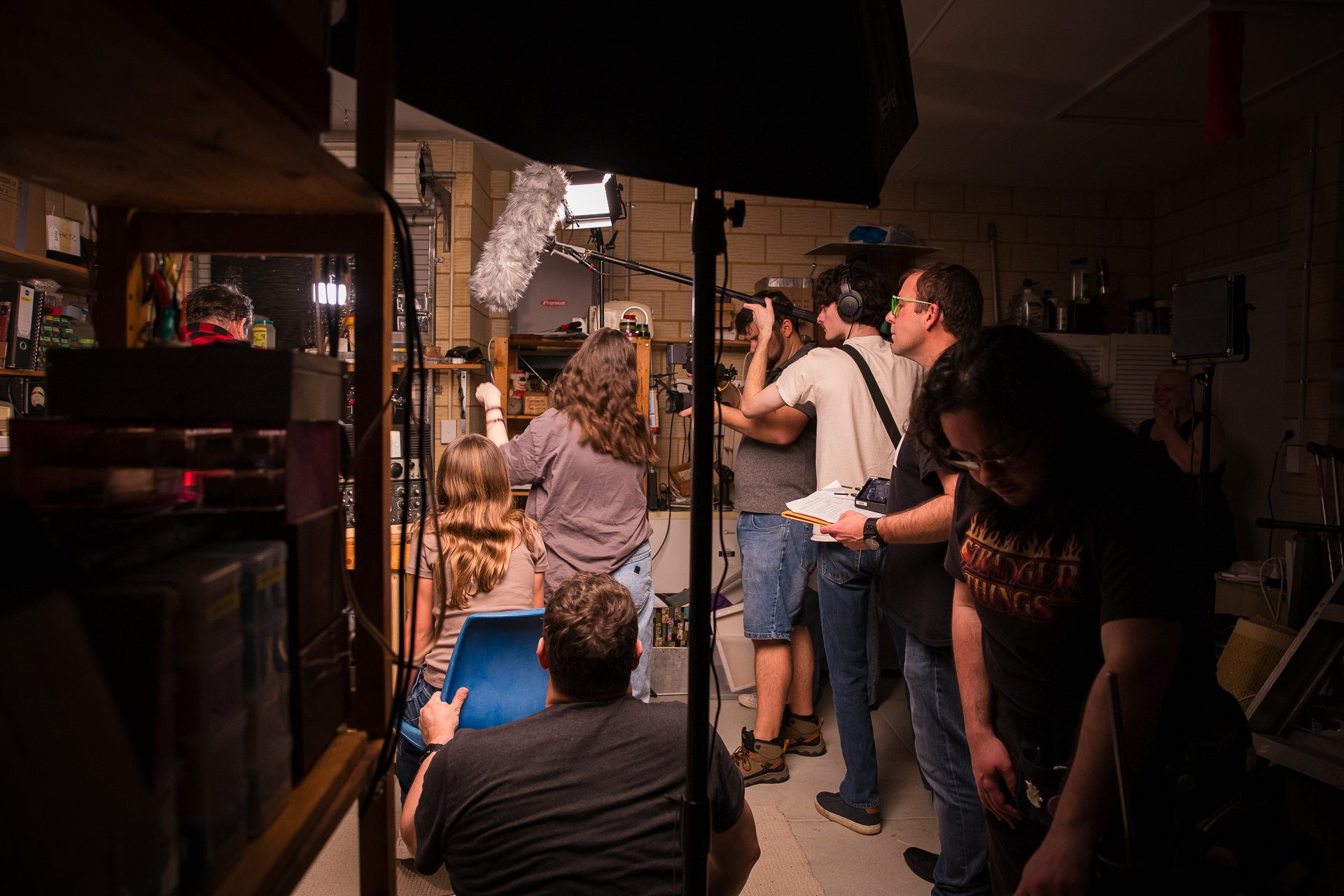
Sound was always going to be one of the most important storytelling tools in Alien Echo.
Static. Satellite signals. Radio interference. Mechanical hums.
These sounds connect Lola's memories with her present reality and become emotional motifs throughout the film.
Rather than simply creating atmosphere, every sound was designed to reinforce her internal journey and remind audiences that the echoes of our past never completely disappear.

While Alien Echo explores trauma and addiction, it is ultimately a hopeful story.
It is about recognising destructive cycles and finding the courage to change them.
The film asks how much of who we are is shaped by those who came before us, but it also asks something even more important.
That is the question I hope audiences continue thinking about long after the credits roll.
If you’d like to follow my filmmaker journey, from behind‑the‑scenes moments through to festival screenings, subscribe to my YouTube channel, where I’ll be sharing updates, insights, and the creative process as the documentary comes to life.